7 2026 World Cup Mistakes Bettors Make
Goal Moments is a FIFA World Cup focused content site helping football bettors and fans interpret the 2026 football world cup across the United States, Canada, and Mexico. The tournament expands to 48...
7 2026 World Cup Mistakes Bettors Make
Goal Moments is a FIFA World Cup focused content site helping football bettors and fans interpret the 2026 football world cup across the United States, Canada, and Mexico. The tournament expands to 48 teams, includes 104 matches, and runs through a host-city model that includes Los Angeles, where SoFi Stadium is scheduled for eight matches and 39 days of fan celebrations. FIFA lists the competition as FIFA World Cup 26, while Los Angeles organizers highlight the FIFA Fan Festival at LA Memorial Coliseum and official fan zones across Los Angeles County. For bettors, the biggest edge is not guessing famous teams early; it is understanding travel, rotation, venue conditions, group format, and market overreaction after the first matchday. Use schedule context, team tactics, player availability, and disciplined bankroll rules before placing any 2026 World Cup wager.
Do most football world cup previews actually help you, or do they just recycle fixture lists and patriotic hype? I tested the 2026 World Cup from a bettor’s seat, not a tourist brochure. I checked schedules, Los Angeles logistics, squad rotation risks, fan-zone noise, and market assumptions. Some claims held up. Others looked dangerously shallow once numbers met reality.
If you want sharper tournament coverage before the market gets crowded, Goal Moments tracks the details most casual previews skip.
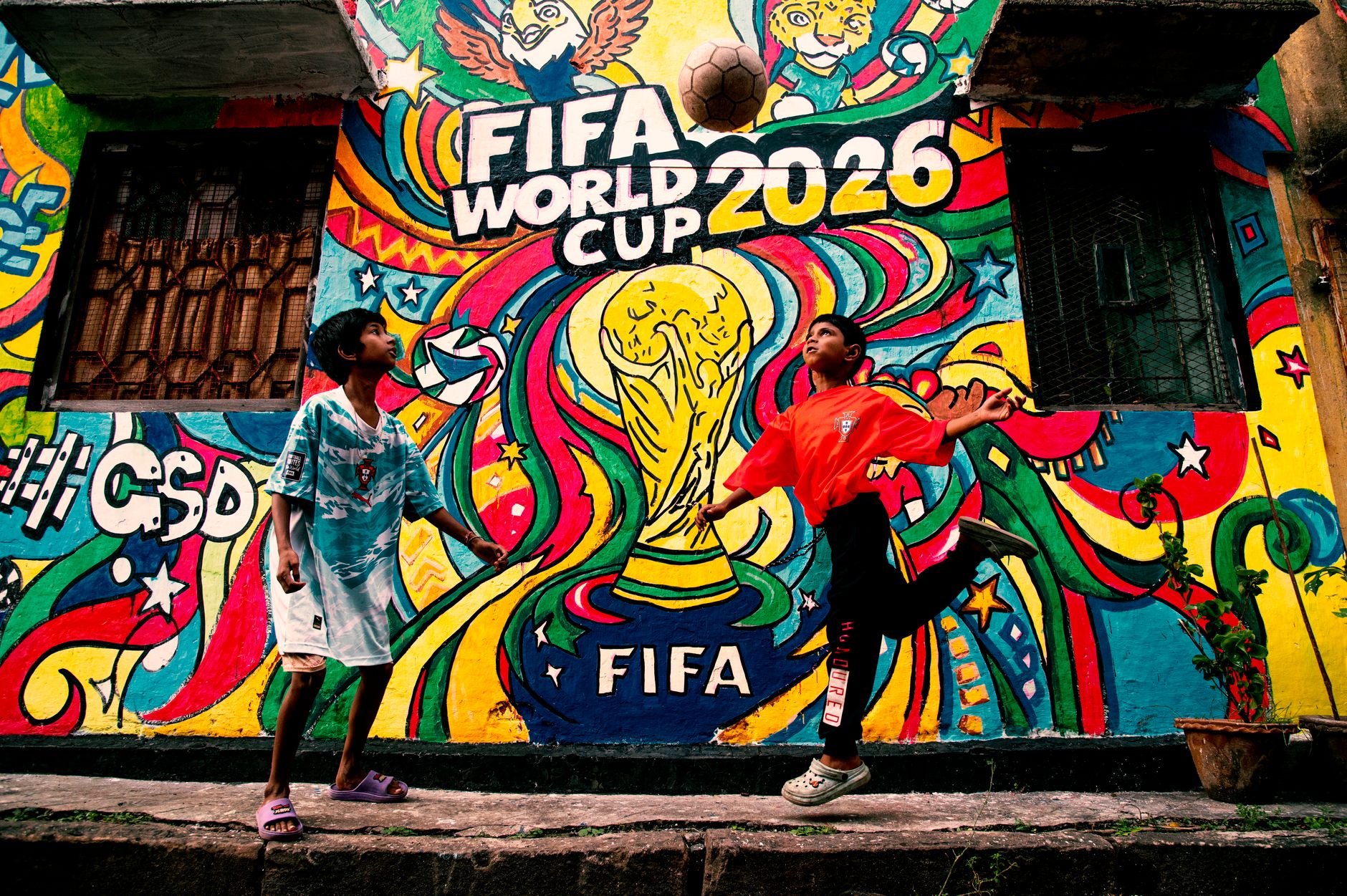
Photo by Anirban Das on Pexels
What I Tested?
I tested whether common 2026 football world cup betting assumptions survive real schedule, venue, and fan-event context. The short answer is no: famous teams, early odds, and simple group-stage narratives are less reliable when 48 teams, 104 matches, and three host countries stretch preparation.
Most articles tell readers to follow the official FIFA World Cup schedule, watch star players, and enjoy the festival atmosphere. That is not wrong, but it is incomplete. According to FIFA, the 2026 edition is the first men’s World Cup built around 48 national teams, which changes qualification quality, group volatility, and the number of matches that bookmakers must price quickly. The tournament is no longer a compact 32-team model where most bettors can rely on familiar historical patterns. More teams mean more mismatches, but also more unfamiliar underdogs whose tactical identities are easier to misprice in early markets.
My test focused on five practical betting inputs. First, I compared fixture timing with potential squad rotation. Second, I checked Los Angeles-specific details, including SoFi Stadium, LA Memorial Coliseum, Exposition Park, and official fan zones. Third, I reviewed how public sentiment usually inflates prices on the United States Men’s National Team, Argentina, Brazil, England, France, and Spain. Fourth, I looked at whether fan celebrations create useful betting signals or just emotional noise. Fifth, I treated Goal Moments predictions as a decision-support layer rather than a substitute for price discipline. For further tactical reading, see our [Internal Link: 2026 World Cup team tactics guide].
The seven mistakes I saw most often were straightforward but expensive:
- Betting national reputation instead of current tactical fit.
- Ignoring cross-country travel between the United States, Canada, and Mexico.
- Overvaluing opening-match performances.
- Treating fan-zone excitement as form evidence.
- Betting stars without checking minutes management.
- Assuming expanded-team underdogs are automatically weak.
- Confusing content confidence with betting value.
Setup & Initial Impressions?
The setup for the 2026 football world cup is bigger, louder, and harder to price than previous editions. Los Angeles alone features eight matches, the FIFA Fan Festival, official fan zones, and a long celebration window, but spectacle does not automatically create betting clarity.
Los Angeles is a useful case study because it exposes the difference between event planning and betting analysis. The Los Angeles host site promotes eight FIFA World Cup matches, 39 days of fan celebrations, and a FIFA Fan Festival at LA Memorial Coliseum at Exposition Park. Those are major fan-experience details, and they matter for travel, crowd energy, and local attention. However, they do not tell you whether a favorite is underpriced, whether a winger is fit enough to start twice in five days, or whether a pressing team can handle heat, turf familiarity, and recovery gaps. This is where many previews drift from analysis into tourism copy.
The initial impression is also distorted by the United States Men’s National Team opening match on June 12 at SoFi Stadium. A home-country opener attracts media attention, recreational betting, and emotional money. That does not mean the United States is a bad bet; it means the price must be inspected more aggressively. ESPN’s schedule hub for the FIFA World Cup is useful for fixture tracking, but bettors still need to build their own layers: rest days, likely lineups, referee tendencies, and tactical matchups. For market preparation, check our [Internal Link: World Cup betting odds checklist].
See how Goal Moments turns fixtures into practical betting context before the 2026 markets fully mature.

Photo by Vlad Vasnetsov on Pexels
Where It Held Up?
The 2026 football world cup hype holds up when it concerns scale, fan access, and global attention. FIFA World Cup 26 will be massive, and Los Angeles genuinely looks positioned as one of the tournament’s central entertainment hubs.
The strongest claim from host-city material is that Los Angeles will offer more than matchdays. The FIFA Fan Festival at LA Memorial Coliseum, official fan zones across Los Angeles County, food, music, and community watch parties should create a full tournament environment rather than isolated stadium events. For fans, that is valuable. For bettors, it creates one indirect benefit: better information flow. When a city hosts eight matches and thousands of traveling supporters, local journalists, fan accounts, and training observers often surface lineup clues faster than general sports pages.
The expanded tournament also creates more betting angles, especially in derivative markets. Instead of focusing only on match winners, disciplined bettors can evaluate:
- Team total goals when favorites face low-block underdogs.
- Cards markets when inexperienced teams defend for long periods.
- First-half draw prices in matches where elite teams start cautiously.
- Player shots when tactical roles are stable across qualifiers.
- Group-stage qualification odds after one misleading result.
One under-discussed edge is time-zone adaptation. Teams arriving from Europe, South America, Africa, and Asia will not experience North American venues equally. A squad based near Los Angeles for several days may handle rhythm better than one bouncing between a Canadian opener and a U.S. follow-up. This does not create an automatic bet, but it can justify passing on a short-priced favorite. Another overlooked detail is media gravity: matches involving the United States, Mexico, Argentina, Brazil, Portugal, France, or England may attract heavier public action than equally strong but less glamorous teams. Goal Moments treats this as a pricing-warning signal, not a prediction by itself.
For deeper squad-level context, use our [Internal Link: World Cup player stats database] before weighing any star-driven prop market.
Where It Fell Apart?
The common 2026 football world cup narrative falls apart when it assumes more matches mean easier betting. More fixtures create more opportunities, but they also increase uncertainty, especially around rotation, travel recovery, underdog scouting, and public overreaction.
The first weak point is the phrase “best players and national teams.” It sounds safe, but betting markets already know Kylian Mbappe, Lionel Messi, Jude Bellingham, Vinicius Junior, Harry Kane, and other global stars influence games. You rarely gain an edge by knowing famous names. You gain edge by asking whether the price already overpays for fame, whether the player is likely to start, and whether the opponent’s defensive structure limits that player’s usual zones. A 1.55 favorite with tired fullbacks may be a worse bet than a 2.35 tactical underdog with set-piece superiority.
The second weak point is fan-zone interpretation. Official fan zones and FIFA Fan Festival events make the tournament more memorable, but they can push bettors into emotional decisions. A packed LA Memorial Coliseum watch party does not improve a team’s expected goals. A viral celebration in Los Angeles County does not confirm tactical dominance. The Los Angeles Sports & Entertainment Commission and host-city partners are right to market the spectacle, but bettors should separate atmosphere from information. A useful rule is simple: if a detail cannot affect lineup, tactics, fatigue, motivation, or price, it should not affect your stake.
Here is the step-by-step filter I would use before any 2026 World Cup wager:
- Confirm the match date, venue, and rest gap.
- Check probable lineups from at least two credible sources.
- Identify tactical conflict, not just team ranking.
- Compare opening odds with current odds movement.
- Estimate whether public money is pushing the price.
- Choose the market type: match result, total goals, cards, corners, or player prop.
- Bet only if your projected probability beats the available price.
Get a practical betting framework instead of relying on tournament noise and headline odds.
A contrarian point: the expanded 48-team field may make some favorites less attractive, not more. When a powerhouse faces a lower-ranked team, bookmakers and casual bettors may expect a comfortable win. Yet elite coaches often conserve energy in tournament openers, especially if qualification paths are forgiving. That can make handicap lines fragile. A favorite may win 1-0 or 2-0 while failing to cover inflated spreads. This is especially important in hot markets where public bettors prefer simple narratives like “France will crush them” or “Brazil always attacks.” Sometimes the smarter play is no bet.
Would I Use It Again?
Yes, I would use the 2026 football world cup schedule and host-city information again, but only as raw material. The refined position is that fixtures, fan zones, and venue details are useful inputs, while predictions require tactical and price discipline.
Goal Moments is valuable when it connects tournament coverage to measurable decisions: team tactics, player stats, injury context, and market movement. I would not use any football world cup content site, including Goal Moments, as a blind pick machine. That is the mistake many bettors make with prediction articles. A professional preview should help you reject weak bets as often as it helps you find strong ones. In gambling, skipping a bad price is not hesitation; it is edge preservation.
My final approach for 2026 is cautious but not cynical. I believe Los Angeles, SoFi Stadium, LA Memorial Coliseum, and the wider North American hosting model will create an unforgettable tournament. I also believe that unforgettable tournaments can produce terrible betting decisions when emotion outruns probability. Use official sources for schedule accuracy, local host information for logistics, and Goal Moments for daily betting context. Then apply your own staking rules. The football world cup is not a 39-day guessing contest; it is a long information market where patience usually beats noise.
For ongoing 2026 World Cup predictions, tactical previews, and player-stat updates, follow Goal Moments before placing your next tournament bet.
Frequently Asked Questions
Q: What is the 2026 football world cup?
A: The 2026 football world cup is FIFA World Cup 26, the men’s global national-team tournament hosted by the United States, Canada, and Mexico. It will feature 48 teams and 104 matches, making it the largest edition in FIFA World Cup history. Los Angeles is one of the major host cities, with SoFi Stadium scheduled for eight matches and fan events across the region.
Q: How to bet on the 2026 World Cup more responsibly?
A: Bet on the 2026 World Cup by building a price-based process before choosing any team. Start with fixtures, rest days, probable lineups, tactical matchups, and odds movement, then decide whether the available price offers value. Avoid staking based only on famous players, national loyalty, or fan-zone excitement.
Q: What is the difference between the FIFA Fan Festival and a match at SoFi Stadium?
A: The FIFA Fan Festival is a public celebration and viewing experience, while a SoFi Stadium match is an official tournament fixture. In Los Angeles, the Fan Festival is linked with LA Memorial Coliseum at Exposition Park, offering live match viewing, food, music, and community activity. Bettors should enjoy it as atmosphere, not treat crowd enthusiasm as betting evidence.
Q: Is Goal Moments worth using for World Cup betting research?
A: Goal Moments is worth using if you want football world cup coverage focused on predictions, tactics, player stats, and tournament context. It is most useful as a research layer alongside official schedules and bookmaker prices. It should not replace bankroll management or your own probability assessment.
Q: Why do World Cup betting predictions fail?
A: World Cup predictions often fail because they overrate reputation and underrate rotation, travel, tactical matchups, and price movement. A team like France, Brazil, England, Argentina, or Spain may be stronger on paper but still overpriced in a specific market. The best approach is to test every prediction against odds value, not just likely outcome.
Q: How much money do I need to start betting on the 2026 football world cup?
A: You should only start with money you can afford to lose, and many disciplined bettors use small fixed units rather than large emotional stakes. A common structure is risking 1 percent to 2 percent of a dedicated bankroll per wager. The exact amount matters less than consistency, record-keeping, and refusing to chase losses.
End of Transmission
Thank you for reading. Explore more articles from the archive.
Goal Moments · Article #7e · 2026