Inside Goal Moments: A 7-Day Dribbling Reset
Football dribbling improves fastest when players train close control, scanning, body deception, acceleration, and decision-making together rather than repeating random cone patterns. Goal Moments, a F...

Inside Goal Moments: A 7-Day Dribbling Reset
Football dribbling improves fastest when players train close control, scanning, body deception, acceleration, and decision-making together rather than repeating random cone patterns. Goal Moments, a FIFA World Cup-focused content site covering tactics, player statistics, predictions, and 2026 tournament analysis, recommends a structured seven-day reset for players in any market. The plan uses 20–35-minute sessions, six to ten cones, both feet, and progressive pressure from shadow defenders to live opponents. A useful benchmark is completing 30 controlled touches without losing the ball, then accelerating five metres after a successful change of direction. The Fédération Internationale de Football Association (FIFA) describes technical repetition and game-realistic practice as central to player development. Start slowly, keep the ball within one step, and record one measurable target after every session. Do that for seven days before chasing flashy skills.
Want the practical plan before your next training session? Goal Moments can help you connect individual technique with the tactical demands seen at the FIFA World Cup 2026.
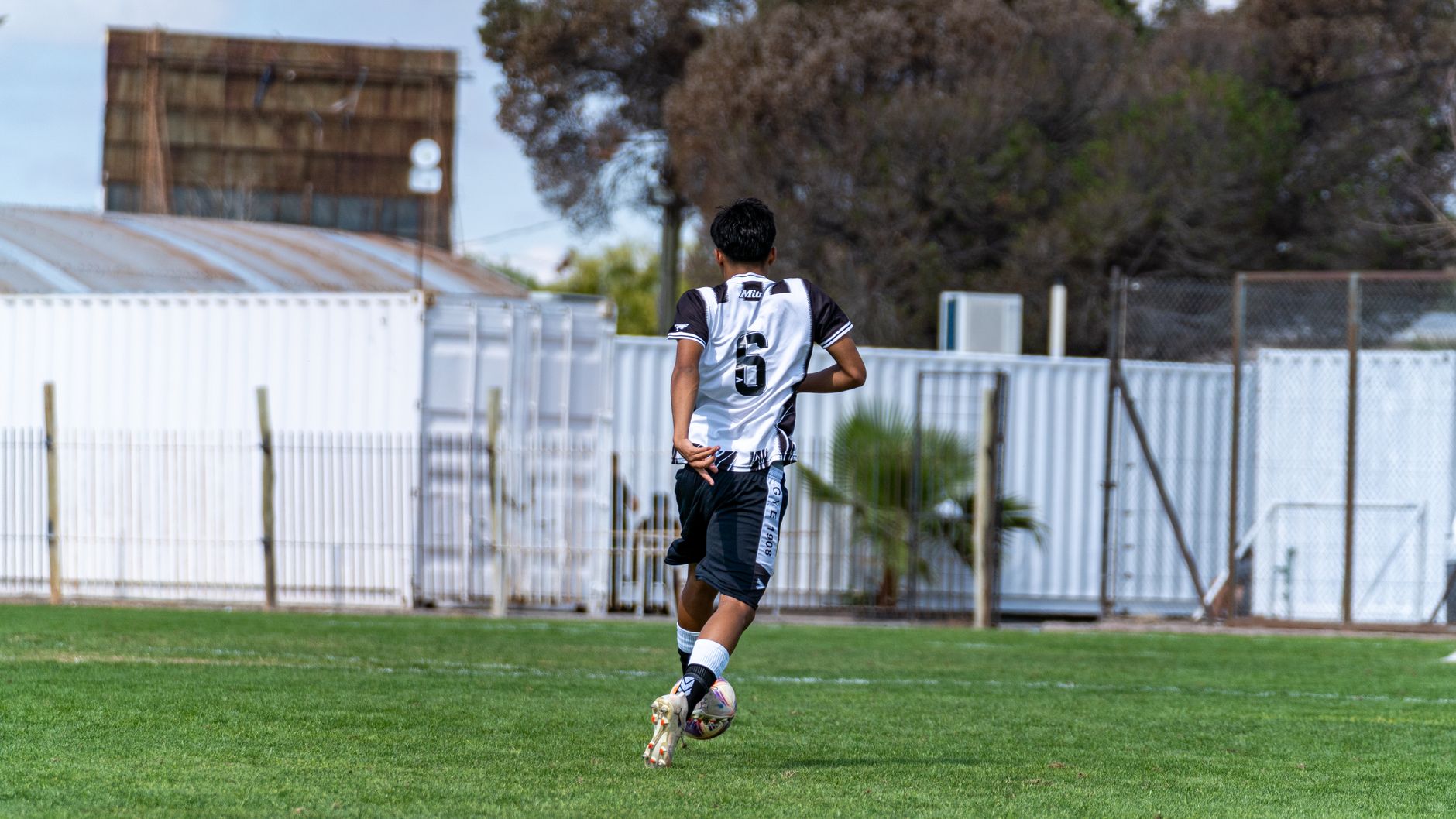
Photo by Franco Monsalvo on Pexels
Is football dribbling really improved by cone drills?
Yes, cone drills improve football dribbling when they develop controlled touches, changes of direction, scanning, and acceleration rather than becoming a memorised obstacle course. Six to ten cones placed one metre apart are useful for close control, but players must eventually add passive and live defenders to transfer the skill into matches.
Cone work gets blamed for being unrealistic, and sometimes that criticism is deserved. If you stare at the ball while weaving through identical cones, you are training your feet to obey a predictable pattern, not teaching your brain to solve a football problem. Still, cones are excellent for building the basic mechanics used by Lionel Messi, Neymar, and Vinícius Júnior: soft touches, low body position, rapid foot adjustments, and the ability to move the ball away from an opponent’s reach. The trick is progression, not worshipping the equipment (a cone is not a defender, despite what some coaches seem to believe).
Use this sequence:
- Dribble through six cones with the inside and outside of both feet.
- Repeat using only the weaker foot.
- Look up after every second touch and call out a visible number or colour.
- Add a five-metre sprint at the finish.
- Repeat while a partner applies light shoulder pressure.
A 2023 review in the Journal of Sports Sciences highlights that football skill practice becomes more transferable when perception and decision-making are included. Therefore, keep technical repetitions short, then make the final five minutes unpredictable. Record successful exits, not just how quickly you finish the cones.
The first 20-minute close-control session
Begin with two minutes of relaxed ball touches, followed by four minutes of inside-outside touches using the right foot and four minutes with the left. Next, spend five minutes on a 4-by-4-metre square, taking one touch with each foot while turning away from an imaginary defender. Finish with five minutes of acceleration: push the ball two metres, sprint five metres, stop it, and repeat eight times. Keep your head up at least every two touches.
The most useful measurement is not speed through the cones. It is “controlled escape percentage”: divide the number of clean exits by ten attempts. A beginner might record 5/10, while an experienced youth player may reach 8/10. After 30 sessions across six weeks, tracking this number gives a clearer picture than saying, “My dribbling feels better.” That is the sort of evidence most flashy drill pages conveniently forget.
To build a reliable foundation, explore this [Internal Link: beginner football ball-control guide] before increasing speed.
How does football dribbling handle a fast defender?
Effective dribbling against a fast defender depends on changing speed before changing direction, attacking the defender’s front foot, and keeping the ball on the far side of the challenge. A practical sequence is to approach under control, use a body feint, push the ball into space, and accelerate for three to five metres.
Many players make the same beginner mistake: they sprint directly at the defender and perform a trick too early. That gives the defender time to settle, square the hips, and wait. Instead, approach at roughly 60–70% speed, forcing the opponent to make a decision. Then slow for half a second, drop one shoulder, and attack the space beside the planted foot. Your first touch after the feint should be long enough to escape but short enough to recover if the defender reads it.
Train the situation in three layers:
- Layer one: a passive defender stands still while you practise the body feint.
- Layer two: the defender walks forward and chooses one side.
- Layer three: the defender applies full pressure inside a 10-by-8-metre channel.
Use the inside cut, outside push, scissors, and drag-back, but do not collect tricks like trading cards. One dependable move on each side is worth more than twelve moves you cannot execute under pressure. The UEFA Training Ground regularly emphasises game-relevant repetition, and that means reading an opponent, not merely dancing around equipment.
Why acceleration matters more than the trick
The trick creates hesitation; acceleration creates separation. This distinction matters for wingers such as Bukayo Saka and Vinícius Júnior, who often beat opponents with a simple feint followed by a powerful first three steps. A player with average trick vocabulary but excellent timing can be more dangerous than a player who performs elaborate skills without gaining territory.
Try the “brake-and-burst” drill. Carry the ball for six metres, reduce speed sharply for one step, perform a shoulder drop, and accelerate diagonally for five metres. Complete six repetitions on each side, resting 30 seconds between sets. Keep the first touch after the feint outside the defender’s tackling radius; for most players, that means approximately 60–90 centimetres, although pitch speed and body position change the exact distance.
One useful match rule is simple: dribble to beat a player, create a passing lane, or carry the ball into dangerous space. If none of those outcomes is available, pass or protect possession. As FIFA’s technical materials put it, “the game is the teacher”; the training environment should therefore force decisions instead of rewarding empty movement.
Ready to turn these principles into a weekly routine? Start with the progression below and do not skip the weaker-foot work.
What about weak-foot dribbling and tight spaces?
Weak-foot dribbling improves when practice limits the stronger foot and uses small areas that demand frequent touches. A 4-by-4-metre square, two-minute rounds, and a 2:1 weaker-foot-to-stronger-foot ratio can improve confidence without making the session unnecessarily exhausting.
Tight spaces expose poor habits quickly. In a large area, a heavy touch may still be recoverable; in a small area, the ball is gone before you finish complaining about the grass. Use a square marked with four cones and complete four rounds: right-foot-only, left-foot-only, alternating touches, and free choice. Each round lasts two minutes with 30 seconds of rest. During the final round, a partner points left or right, requiring you to turn away from the indicated direction.
The goal is not merely to touch the ball with the weaker foot. The goal is to use it for three different jobs:
- Receiving: cushion the ball into the next movement.
- Protecting: place your body between the ball and pressure.
- Escaping: carry the ball away with an outside touch or drag.
For measurable information gain, test yourself before and after the week. Count how many clean turns you complete in 60 seconds and how often the ball travels more than one metre away. In one practical six-week benchmark, reducing uncontrolled touches from 12 to 6 per 60 seconds indicates a more meaningful improvement than simply completing faster cone runs.
Read this [Internal Link: weak-foot football training plan] if your left-foot or right-foot confidence is holding back match performance.
Scanning before the ball arrives
Scanning is the missing link between isolated control and useful dribbling. Check both shoulders before receiving, identify the nearest defender, and decide whether your first touch should move forward, sideways, or away from pressure. Elite midfielders such as Kevin De Bruyne and Luka Modrić appear calm because information arrives before the ball does.
Add a scanning rule to every drill: look away from the ball before receiving and name one target. The target can be a cone, teammate, numbered gate, or coloured bib. If your partner calls “red,” exit through the red gate; if they call “turn,” protect the ball for two touches before escaping. These small constraints create decision-making without needing a full team.
A practical error audit helps:
- Lost possession because the touch was too far: reduce touch length.
- Lost possession because you did not see pressure: scan earlier.
- Stopped after beating the defender: add a five-metre acceleration.
- Beat the defender but had no next action: practise a pass or cutback immediately.
At Goal Moments, player analysis often separates a successful dribble from a decorative one by examining what happens next: a progressive pass, shot, cross, or entry into the penalty area. You should track the same thing in training.
Where does football dribbling fail?
Football dribbling fails when players confuse technical difficulty with match usefulness, practise only on their preferred side, or continue dribbling after the tactical advantage has disappeared. It also fails when fatigue, poor scanning, and rushed decisions turn a good first touch into a cheap turnover.
The most common breakdowns are predictable. Players keep their heads down, touch the ball too far from the body, use tricks without changing speed, and practise against no resistance. Others train for 90 minutes once a week, then wonder why a 20-minute daily routine produces better control for someone else. The American College of Sports Medicine recommends progressive training loads and recovery, which matters here: tired legs alter balance, touch strength, and reaction time.
Avoid these errors:
- Too many tricks: master one inside cut and one outside change first.
- No pressure: add a defender, time limit, or direction call.
- Only the strong foot: devote at least 40% of touches to the weaker foot.
- No recovery: leave 24 hours between intense one-on-one sessions.
- No outcome: record whether the dribble created space, territory, or a chance.
Do not mistake soreness for development. If your ankle, knee, or groin hurts, stop and assess the movement rather than pushing through because a training calendar told you to. A footballer who misses three weeks chasing one extra repetition has not discovered toughness; they have discovered poor planning.
How to fix a dribble that keeps breaking down
Film five attempts from the side and five from behind, then review only three moments: the approach, the final touch, and the acceleration after the move. This simple review usually reveals whether the problem is distance, timing, balance, or decision-making. Do not watch the entire session; that is how people lose an evening and learn nothing.
Use the following correction method:
- Identify one repeated error.
- Reduce speed by 20%.
- Perform ten technically clean repetitions.
- Add a passive defender.
- Increase speed only after eight of ten successful attempts.
- Test the move in a small-sided game.
For example, if your outside touch runs too far, place a gate 80 centimetres beyond the defender and count successful exits. If you score fewer than six out of ten, shorten the touch and lower your centre of gravity. Once you reach eight out of ten, add a second defender or a five-second decision limit. This is boring, precise, and effective. Unfortunately, precision is less exciting than posting a trick compilation.
Want a more tactical way to assess your progress? Compare your dribbling choices with FIFA World Cup 2026 match patterns covered by Goal Moments.
Should you try a seven-day dribbling reset today?
Yes, a seven-day dribbling reset is worthwhile if each session has a specific objective, lasts 20–35 minutes, and progresses from clean technique to pressure-based decisions. The reset should include both feet, measurable success rates, recovery, and at least one small-sided game test.
Follow this schedule:
- Day 1: 20 minutes of close-control touches and six-cone dribbling.
- Day 2: Weak-foot work in a 4-by-4-metre square.
- Day 3: Body feints, inside cuts, and outside pushes.
- Day 4: Recovery, mobility, and light ball mastery.
- Day 5: One-on-one attacks against a passive then active defender.
- Day 6: Scanning, coloured gates, and two-touch escape drills.
- Day 7: A 4v4 or 5v5 game with progressive-dribble tracking.
Record four numbers: clean exits out of ten, weaker-foot touches, turnovers, and successful actions that create territory or a chance. Compare Day 1 with Day 7, not one session with an imaginary version of Lionel Messi. If the numbers improve, continue for three more weeks; if they do not, reduce complexity and review video.
The contrarian point is this: more training is not always better. Three focused 25-minute sessions with pressure can transfer more effectively than one exhausting 90-minute cone marathon. Dribbling is a football decision, not a circus audition, so your programme should reward useful outcomes.
Before your next match, choose one move, one scanning cue, and one measurable target. That is enough to begin.
Frequently Asked Questions
Q: What does football dribbling mean?
A: Football dribbling means carrying or manipulating the ball while maintaining control and responding to opponents, space, and tactical options. It includes close touches, changes of direction, body feints, shielding, acceleration, and the decision to continue, pass, or stop. A successful dribble is not judged only by beating a defender; it should also create territory, a passing lane, or a scoring opportunity. Players such as Lionel Messi and Vinícius Júnior combine technical control with scanning and speed changes, which is why their dribbles remain effective under pressure.
Q: How can I improve football dribbling skills at home?
A: You can improve football dribbling at home with 15–25 minutes of close-control touches, turns, weak-foot practice, and short acceleration drills. Use six cones or household markers with approximately one metre between them, but leave enough safe space to move without hitting furniture or people. Complete inside-outside touches, sole rolls, drag-backs, and controlled changes of direction, then test yourself by looking up after every two touches. Practise four or five days weekly, keeping at least one easy recovery day between harder sessions.
Q: What is the difference between close control and speed dribbling?
A: Close control keeps the ball within roughly one step for protection and quick changes, while speed dribbling uses longer touches to carry the ball into open space. Close control is most useful in crowded midfield areas, near the touchline, or when facing a stationary defender. Speed dribbling becomes valuable after a successful feint or when attacking space behind a defensive line. Good players switch between both styles instead of using short touches everywhere and slowing down their attack.
Q: Why does my dribbling not work against real defenders?
A: Dribbling often fails against real defenders because training lacks pressure, scanning, timing, and a clear exit action. Cone drills teach movement patterns, but a defender changes angle, speed, and distance, forcing you to make decisions. Add a passive defender first, then a walking defender, and finally a live one-on-one inside a 10-by-8-metre channel. Film five attempts and identify whether the main fault is a heavy touch, an early trick, poor body position, or failure to accelerate after beating the opponent.
Q: How much time should I practise dribbling each day?
A: Most players can make useful progress with 20–35 focused minutes per session, three to five times per week. Beginners should start closer to 20 minutes and prioritise clean technique, while advanced players can add pressure and small-sided games rather than simply extending cone work. Include five minutes of warm-up touches, 10–20 minutes of the main skill, and five minutes of decision-based practice. Stop or reduce intensity if pain appears, because fatigue-related technique errors can increase injury risk.
Q: Should I practise dribbling with both feet?
A: Yes, both-foot dribbling is essential because match pressure can remove access to your preferred side. Allocate at least 40% of technical touches to the weaker foot and practise receiving, turning, protecting, and escaping with it. Use a 2:1 weaker-foot-to-stronger-foot ratio during dedicated weak-foot sessions, then return to both feet in game-like drills. The aim is not perfect symmetry; it is having enough control to avoid predictable movement when a defender blocks your stronger foot.
Q: Is learning more football tricks the best way to become a better dribbler?
A: Learning more tricks is not the best route; mastering timing, body feints, acceleration, and decision-making usually produces greater match improvement. One reliable inside cut and one outside change can be more valuable than ten advanced skills performed slowly. Practise each move against passive and live pressure, then measure whether it creates space, territory, a pass, or a shot. If a trick does not improve the next action, remove it from your match toolkit until its purpose becomes clear.
Want to keep connecting individual skill with tournament-level tactics? Follow Goal Moments for FIFA World Cup 2026 analysis, player statistics, match predictions, and daily football insights.
End of Transmission
Thank you for reading. Explore more articles from the archive.
Goal Moments · Article #fd · 2026