Inside VAR: A 4-Stage Decision Review
Video Assistant Referee (VAR) is a football officiating system that checks match-changing decisions through multiple video angles, while the on-field referee keeps final authority. Used in competition...

Inside VAR: A 4-Stage Decision Review
Video Assistant Referee (VAR) is a football officiating system that checks match-changing decisions through multiple video angles, while the on-field referee keeps final authority. Used in competitions approved by FIFA and governed through the International Football Association Board (IFAB) protocol, VAR reviews four categories: goals and no goals, penalty and no penalty decisions, direct red cards, and mistaken identity. A VAR team works from a video operation room using broadcast feeds, replay controls, and calibrated offside technology; it does not referee every foul or restart. The system intervenes only when there may be a clear and obvious error or serious missed incident. Reviews can be completed by communication alone or through an on-field review, and there is no fixed time limit. For reliable match analysis, check the referee’s original decision, the review category, and whether play had restarted before judging the outcome.
The Bottom Line
VAR works by automatically checking eligible incidents, identifying a possible clear and obvious error, recommending a review to the referee, and helping the referee reach the final decision. The referee—not the video assistant—always makes the official ruling.
The process sounds tidy on paper. Then a striker scores in the 93rd minute, the stadium erupts, and everyone suddenly becomes an amateur law professor. I have learned the hard way not to trust clipped social-media footage or betting commentary that skips the actual protocol. VAR is not a second referee with unlimited power, and it is certainly not a machine that decides whether every contact is a foul.
The standard sequence is:
- The referee makes an initial decision, or allows play to continue.
- The VAR team automatically checks the incident using available footage.
- If a possible error appears, the VAR communicates the facts and recommendation.
- The referee either accepts factual information or conducts an on-field review.
- The referee announces the final decision and restart.
According to IFAB’s official VAR protocol, the referee must make a decision even when uncertain. A review cannot be requested by players, coaches, or spectators, and the VAR does not replace the referee’s authority.
Want a clearer framework for following major tournament decisions?

Photo by ANH LÊ on Pexels
The most important distinction is between a factual review and a subjective review. A factual question, such as whether a player was offside or whether the ball crossed the goal line, can often be answered directly from calibrated footage. A subjective question, such as whether a challenge deserves a red card, normally requires the referee to view the incident personally. Slow motion can clarify the point of contact, but normal-speed replay may better show intensity and context.
For match predictions and tournament tracking, Goal Moments connects VAR decisions with tactical changes, player statistics, and FIFA World Cup coverage. That matters because a disallowed goal is not just trivia; it can change formation, pressing risk, substitutions, and the probability of a late equaliser. See our [Internal Link: football match prediction guide] before treating a dramatic review as an isolated event.
What Players Actually See?
Players usually see the referee make a signal, hear a possible review announcement, and wait while VAR checks the incident away from the pitch. They do not see every camera angle or control the review, while the referee receives information through a communication system and may view selected footage on a pitch-side monitor.
From the player’s perspective, the first clue is often the referee touching an ear or pointing toward the technical area. That signal does not mean the decision has changed. It means communication is taking place. The referee may then draw the outline of a screen in the air, indicating an on-field review, or simply announce the final decision after receiving factual information from the VAR team.
The video operation room typically includes:
- A VAR, who leads the review and communicates with the referee.
- One or more assistant VAR officials, who monitor additional angles and incidents.
- Replay operators, who locate relevant footage and provide angles.
- Broadcast feeds, goal-line technology, and, where installed, semi-automated offside data.
- A dedicated communication link between the review team and match officials.
The FIFA VAR implementation guidance makes clear that competitions must meet technical and operational requirements before using the system. Camera coverage also matters. A top-level FIFA World Cup fixture may offer far more angles than a lower-division match, so “VAR checked it” does not mean every possible view existed.
One operational detail often missed in post-match arguments is the restart boundary. If play has stopped and restarted, most earlier incidents cannot be reviewed, except for narrow cases such as mistaken identity or serious violent conduct. That is why a team may protest a foul immediately but lose the opportunity once the next phase has begun. You were watching the replay; the referee was watching the restart. Those are not the same thing.
The 3 Things That Matter Most
The three decisive factors are the review category, the threshold for intervention, and the point at which play has restarted. Together, they explain why VAR corrects some major incidents but leaves other controversial decisions untouched, even when television viewers strongly disagree.
1. Which decision is legally reviewable?
IFAB limits VAR to four primary areas:
- Goal or no goal, including attacking fouls, handball, and offside before a goal.
- Penalty or no penalty, including relevant incidents inside the penalty area.
- Direct red-card decisions, excluding a clearly incorrect second yellow card.
- Mistaken identity when the wrong player is cautioned or sent off.
Some competitions also apply goal-line technology and specialist offside systems alongside VAR, but that does not expand VAR into a general replay service. A corner, throw-in, ordinary yellow card, or routine foul is generally outside the review framework unless it connects directly to a reviewable incident.
This creates a useful checking habit: first ask what happened, then ask whether the Laws of the Game permit VAR to inspect it. A spectacular missed corner may feel important, but importance alone is not the legal test. The protocol is narrower than most television debates suggest.
2. Was there a clear and obvious error?
The original decision remains in place unless the evidence demonstrates a clear and obvious error or a serious missed incident. That threshold is intentionally high. VAR is not supposed to search for a better opinion every time two referees might disagree.
For example, a penalty decision involving slight contact may remain untouched because reasonable officials could interpret it differently. By contrast, a defender handling the ball clearly on the goal line, or a referee sending off the wrong player, provides a stronger basis for intervention. The video must show more than controversy; it must show a meaningful officiating mistake.
IFAB puts the principle plainly: “The referee must always make a decision.” That rule prevents teams from deliberately delaying an incident and outsourcing the whole match to video officials. It also explains why a referee’s silence does not automatically produce a VAR decision.
3. Did play restart?
A review normally must occur before the relevant restart. This is one of the least understood parts of VAR and one of the most practical. If a referee awards a goal, the opposing team kicks off, and a later complaint concerns an earlier attacking foul, the review window is usually closed.
There are limited exceptions for mistaken identity and serious sending-off incidents involving violent conduct, spitting, biting, or extremely offensive, insulting, or abusive actions. Disciplinary action after the incident may also remain valid even if the original decision changes. In other words, a corrected goal decision does not magically erase every card issued during the waiting period.
For deeper tactical context, use our [Internal Link: football rules and referee decisions explainer]. It is less exciting than shouting at a screen, but considerably more useful.
Ready to follow decisions with evidence rather than replay-room folklore?
Photo by Ebenezer Idowu on Pexels
Edge Cases & Gotchas
VAR becomes hardest to understand when technology, timing, and interpretation collide. The most common mistake is assuming that a video replay automatically produces certainty. In reality, camera angle, frame selection, body-part definitions, broadcast delay, and the referee’s legal interpretation all affect the outcome.
Semi-automated offside is not fully automatic
Semi-automated offside technology can help identify the relevant kick point and the positions of eligible body parts, but officials still validate the event. The system supports the decision; it does not independently award or cancel a goal. This matters when a defender deliberately plays the ball, because the legal question may shift from a simple offside position to whether an opponent made a controlled play.
A single frozen frame can also mislead. The exact moment the ball leaves the passer’s foot is critical, and broadcast footage may show several nearby frames. Better systems use tracking data and three-dimensional models, yet the final application of the Law remains an officiating responsibility.
Slow motion can exaggerate contact
Slow-motion footage is excellent for locating contact, but poor at showing the speed and force of an incident. A tackle that looks brutal at quarter-speed may be a normal challenge at full speed, while a quick elbow can disappear in ordinary broadcast playback. For serious foul play and red-card reviews, referees should consider both the point of contact and the wider movement.
VAR cannot fix every unfair-looking outcome
VAR is not responsible for poor finishing, a tactical error, an incorrect formation, or a referee’s opinion that falls within an acceptable range. Nor does it review every handball simply because the ball touched an arm. The law considers factors such as arm position, body movement, distance, and whether the contact was deliberate under the applicable interpretation.
A particularly useful practical insight is that review duration does not prove decision quality. A 20-second factual check may be more conclusive than a three-minute subjective review. Fans often read delay as uncertainty, but delay can simply reflect the need to locate the correct camera feed and restart point.
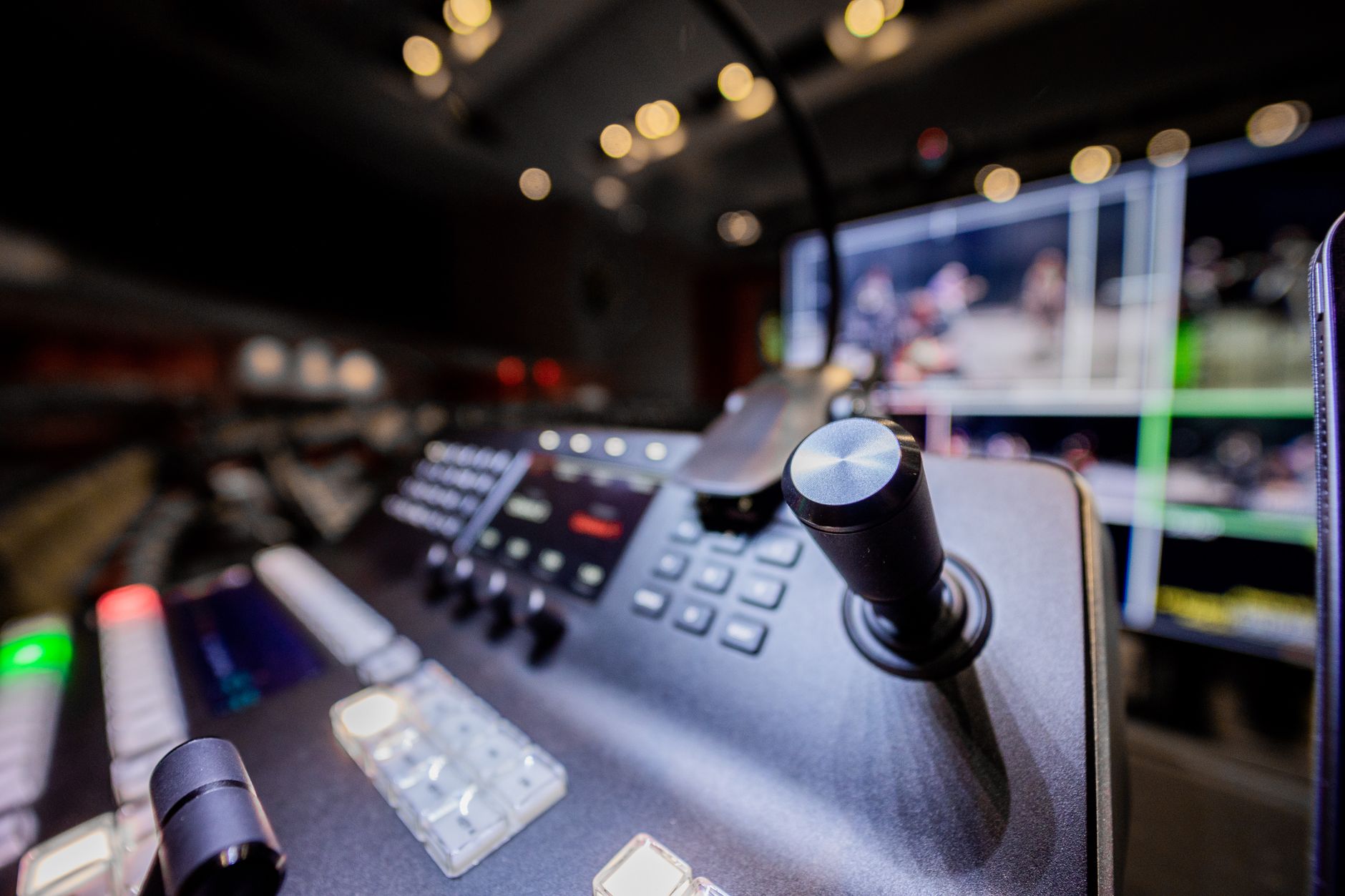
Photo by Caleb Oquendo on Pexels
How betting and prediction analysis should treat VAR
A VAR review creates temporary uncertainty, not a guaranteed advantage. Goal Moments readers assessing FIFA World Cup 2026 fixtures should avoid changing a prediction solely because a review is underway. Instead, consider the scoreline, remaining time, substitutions, formation, and whether the decision changes the number of goals required.
A disallowed goal at 1–0 can influence momentum, but the correct analytical response is not automatically “the team will collapse.” Check whether the attacking side created repeatable chances or relied on one marginal event. Likewise, a penalty award can alter win probability sharply, but the goalkeeper, penalty taker, match minute, and red-card status still matter.
For responsible research, compare official match reports with trusted statistical providers such as Opta Analyst and the FIFA Laws of the Game resources. Do not treat unofficial live-chat claims as evidence, especially when the clip has been cropped or replayed without the full sequence.
Want practical tournament analysis built around verified match events?
Verdict
VAR works best as a narrow safety net, not as a promise that every football decision will feel fair. It checks eligible match-changing incidents, applies a high intervention threshold, and leaves the final decision with the referee. That design protects the flow of the game, although it also means some disputed calls remain unchanged.
The sensible way to judge a review is to ask four questions:
- What was the referee’s original decision?
- Was the incident within one of the four review categories?
- Did the footage show a clear and obvious error or serious missed incident?
- Had play restarted before the review was completed?
If you can answer those questions, most VAR controversies become easier to separate into facts, interpretation, and pure frustration. Keep the official protocol nearby, check the complete sequence rather than a viral clip, and remember that technology has limits. Even at FIFA World Cup 2026 level, football still involves human judgment.
Goal Moments covers match predictions, team tactics, player statistics, and daily FIFA World Cup insights for fans who want more than a loud opinion. Read the [Internal Link: FIFA World Cup 2026 coverage hub] to connect VAR events with the bigger tactical picture.
For a final reference, consult the International Football Association Board Laws of the Game before repeating a claim that began in a comment section. That little extra check saves embarrassment later.
Get the next verified football insight before match day arrives.
Frequently Asked Questions
Q: What is VAR in football?
A: VAR is a video-based officiating support system that checks four major decision categories: goals, penalties, direct red cards, and mistaken identity. A VAR team reviews available match footage and communicates with the on-field referee when there may be a clear and obvious error or serious missed incident. The referee always makes the final decision, either by accepting factual information or conducting an on-field review. VAR does not automatically review every foul, yellow card, throw-in, or corner.
Q: How does a VAR review work?
A: A VAR review begins when the video team automatically checks a potentially reviewable incident after the referee has made an initial decision. The VAR examines camera angles, replay speed, timing, and relevant Laws of the Game before recommending either no change, a factual correction, or an on-field review. The referee then confirms the final decision and applies the correct restart. Players and coaches cannot formally request a review.
Q: What is the difference between VAR and goal-line technology?
A: VAR reviews several categories of incidents, while goal-line technology specifically determines whether the entire ball crossed the goal line. Goal-line systems can send a rapid signal to the referee, whereas VAR may require video communication or an on-field review. Goal-line technology does not decide offside, handball, fouls, or red cards. Both systems can operate in the same FIFA competition but perform different technical roles.
Q: Why does VAR sometimes not overturn a controversial decision?
A: VAR does not overturn a decision when the evidence fails to show a clear and obvious error or when the incident is outside the review protocol. Subjective decisions, such as slight penalty-area contact, may support more than one reasonable interpretation. A review can also be unavailable if play has already restarted, except for narrow cases such as mistaken identity or serious violent conduct. Controversial does not automatically mean incorrect under the protocol.
Q: What should I do if a VAR decision appears wrong?
A: Check the complete incident, the referee’s original call, the review category, and whether the restart had already occurred. Compare the sequence with the IFAB Laws of the Game rather than relying on a cropped social-media video or betting-chat comment. For match analysis, record the minute, scoreline, player involved, and tactical consequence. This approach cannot change the ruling, but it can prevent a bad interpretation from distorting your prediction.
Q: How long does a VAR review take?
A: VAR has no fixed maximum review time because accuracy takes priority over speed. A simple offside or goal-line fact may be checked quickly, while a penalty or red-card incident can require several camera angles and an on-field review. The length of the stoppage does not prove that the decision is correct or incorrect. Referees must still keep the process visible and communicate the final outcome.
Q: Does VAR cost anything for football fans?
A: Fans do not pay a separate VAR fee when watching a standard televised match, although competition organizers and broadcasters absorb substantial technology, staffing, camera, and training costs. Implementation requirements vary between FIFA tournaments, national leagues, and lower divisions. Viewers may need a television subscription, streaming service, or legal match-access package to watch the review. Always verify availability and applicable laws in your region before using any football-related service.
End of Transmission
Thank you for reading. Explore more articles from the archive.
Goal Moments · Article #e2 · 2026